Heetch · 2024–26
Driver money for five African markets: supply-crippling debt suspensions now resolved within 10 hours
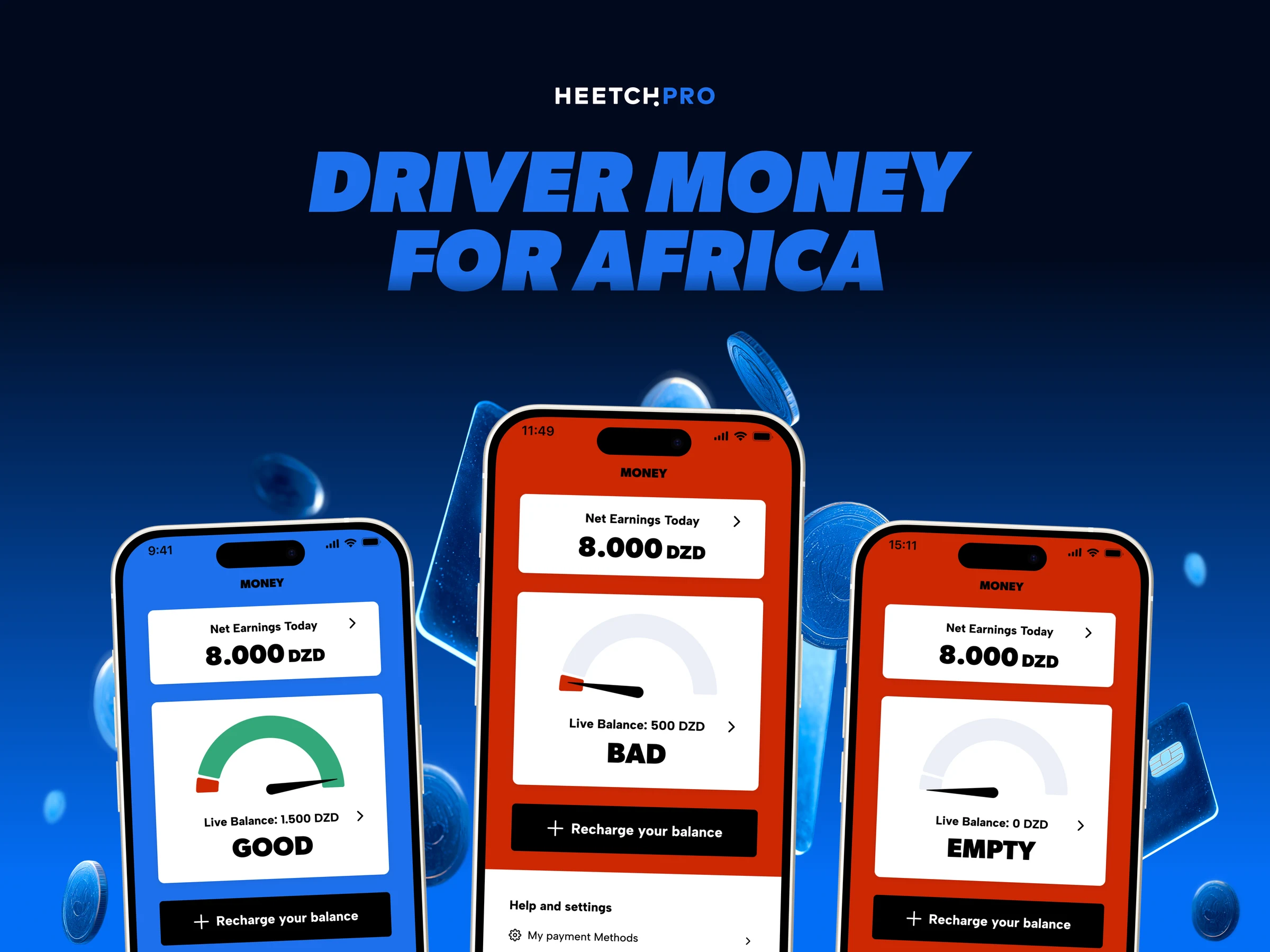
- Problem
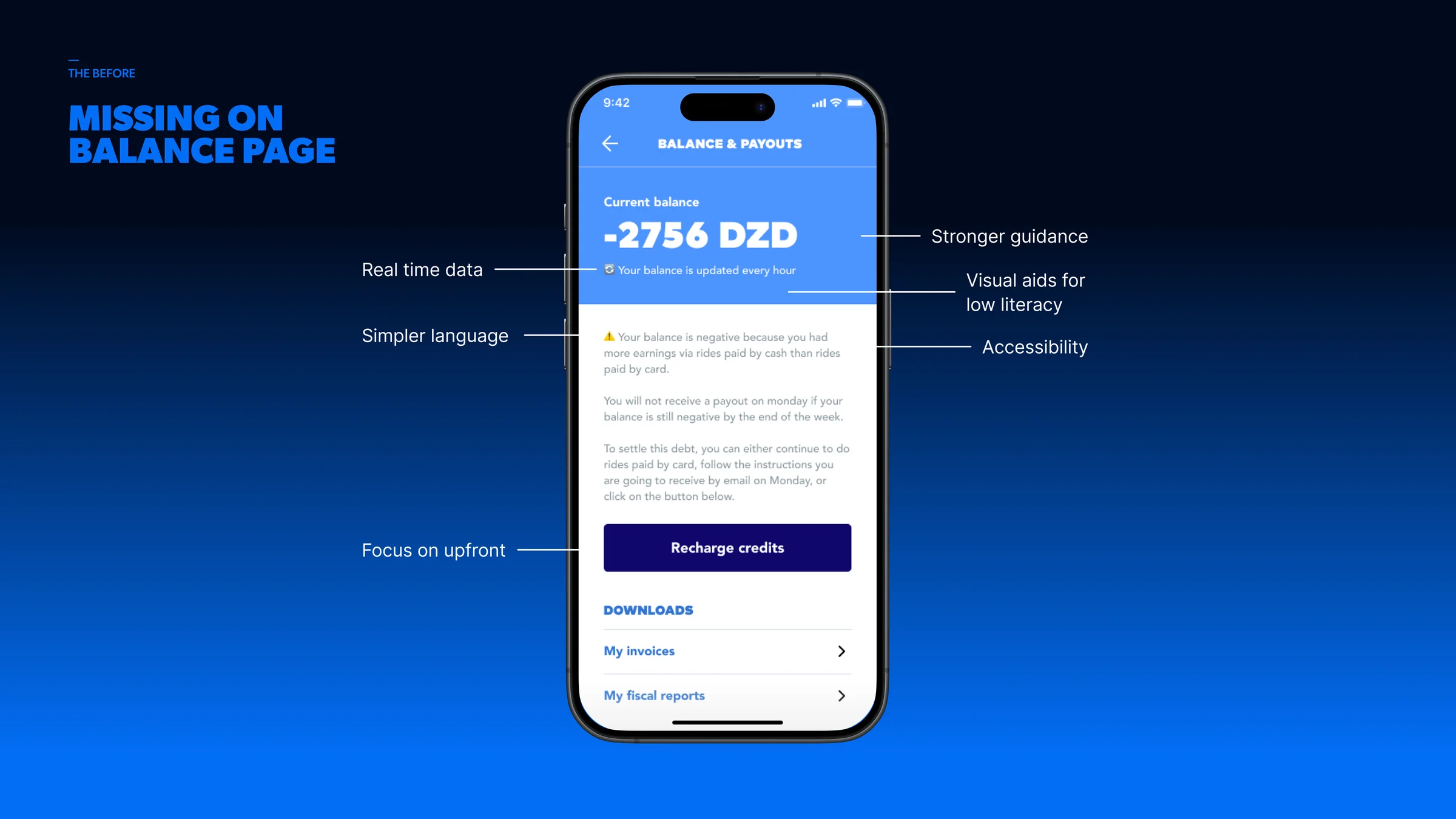
- In Africa, passengers pay drivers in cash, so drivers owe Heetch its commission. Drivers in debt get suspended, and suspensions ran into the hundreds of thousands, crippling supply. A first fix moved nothing.
- My role
- Senior Product & Service Designer, owning discovery, design, usability testing and UX writing across five markets.
- What I did
- Redesigned HeetchPro’s Money section (balance, top-up, earnings) around one principle: replace reading with recognition.
- Impact
- Mali: 90% of suspended drivers back online within 10 hours, up from 50%. Algeria: weekly suspensions down from 6–8k to 3–6k.
A model change nobody understood
In Algeria, West Africa and Angola, passengers pay their driver in cash, so the driver owes Heetch its commission. Drivers who fall into debt get suspended, and suspensions ran into the hundreds of thousands, crippling supply. The team switched to a prepaid balance that drivers top up, but only relabelled the button. Nothing moved.
“We changed this, so why is it not working?” — Mathieu, CPO, on my first day at Heetch
Discovery: two opposite users
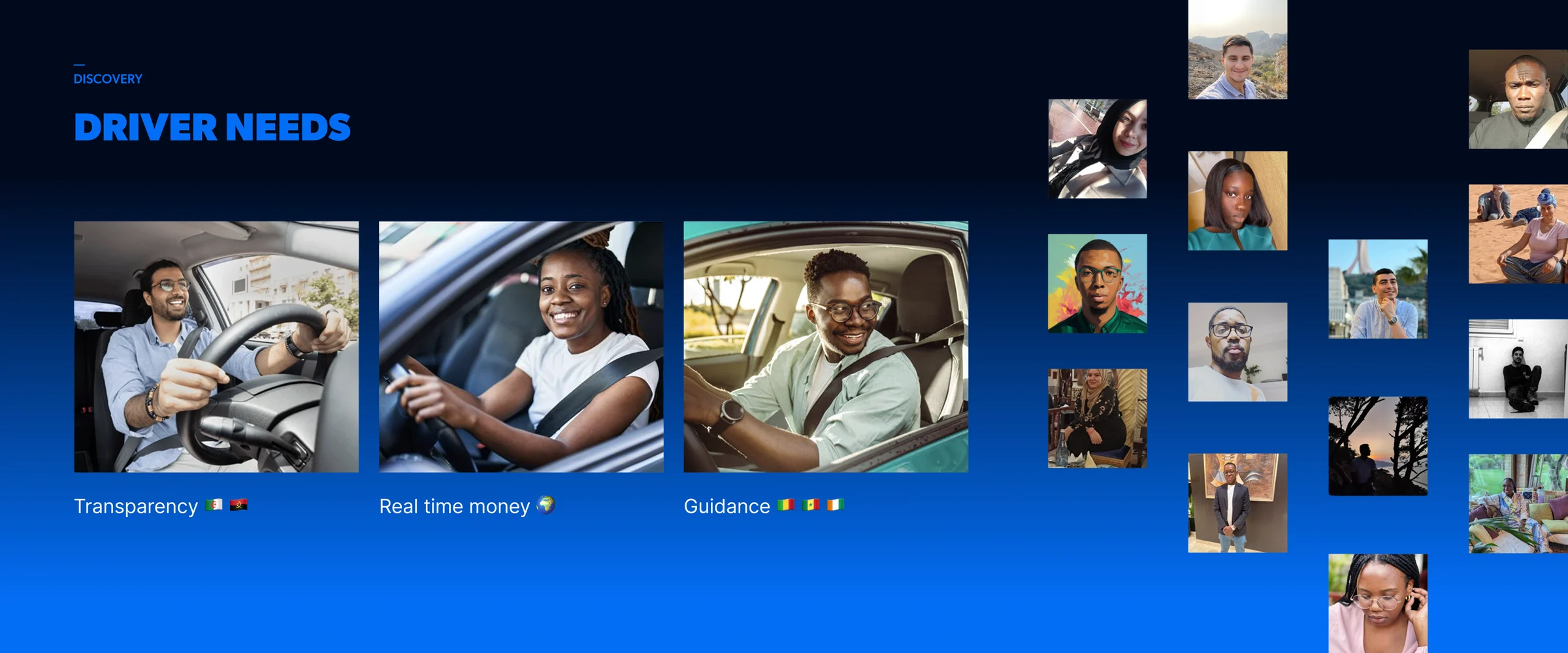
Expert interviews with ops teams and country managers in five markets, in three languages, plus video observation of drivers topping up at Heetch Cafés.
- Low literacy was the main blocker. 80% of Algerian drivers prefer or only read Arabic, in an auto-translated app.
- Commission was a broken mental model: markets launch at 0%, and drivers never noticed when fees kicked in.
- Pro drivers needed the opposite: line-by-line transparency to trust Heetch.
The brief: simpler and more detailed, at the same time.
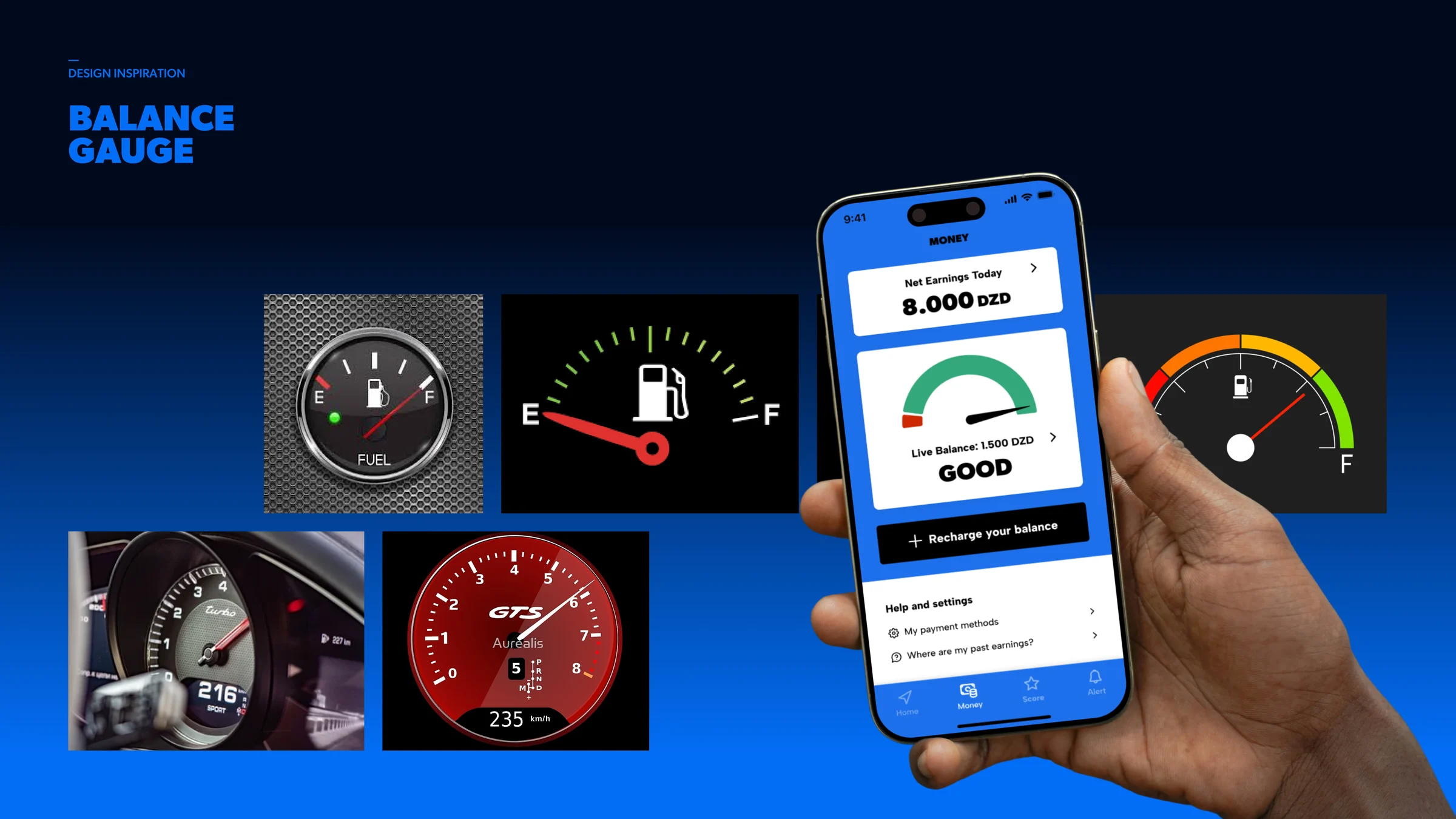
Principle: replace reading with recognition
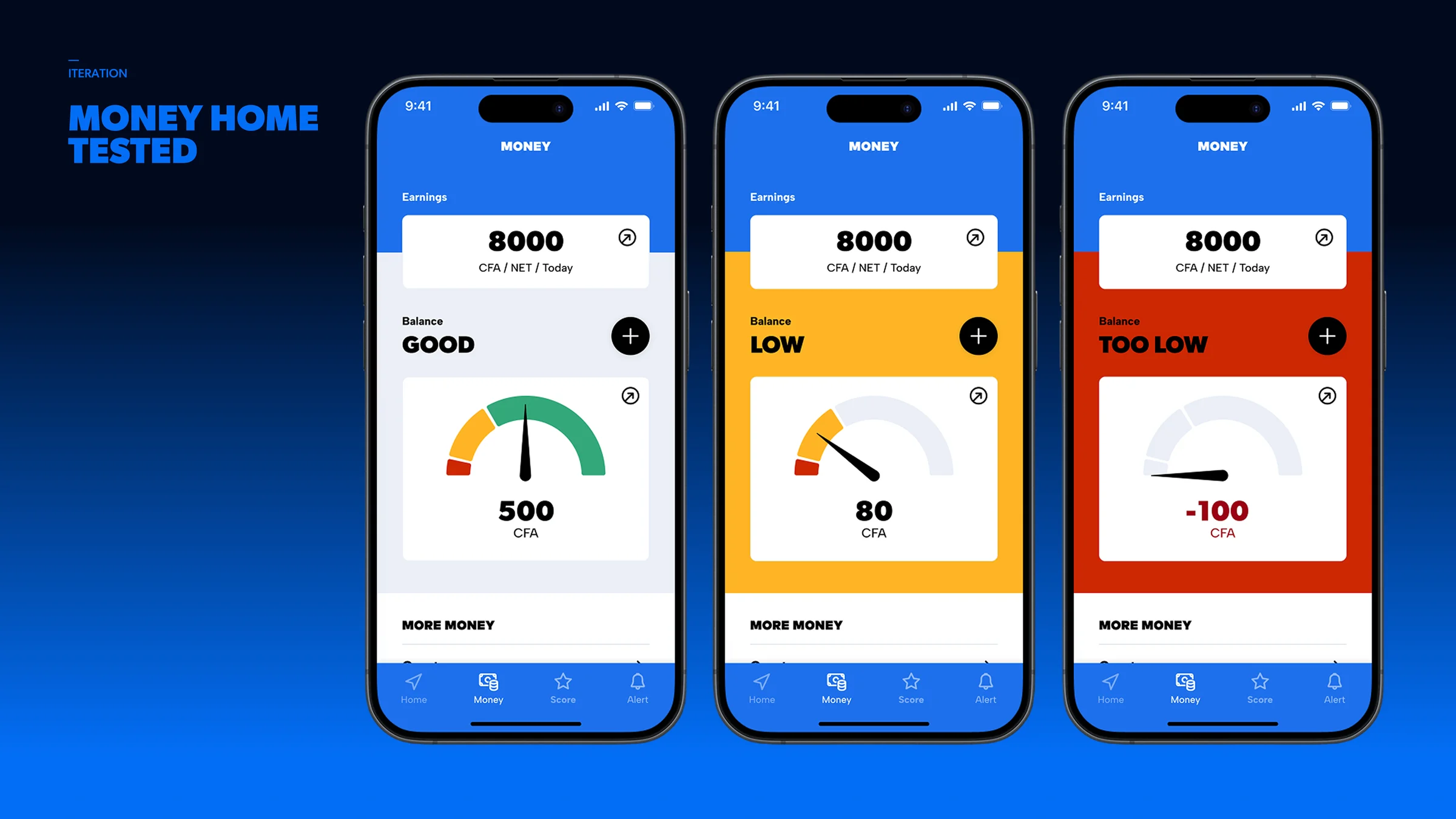
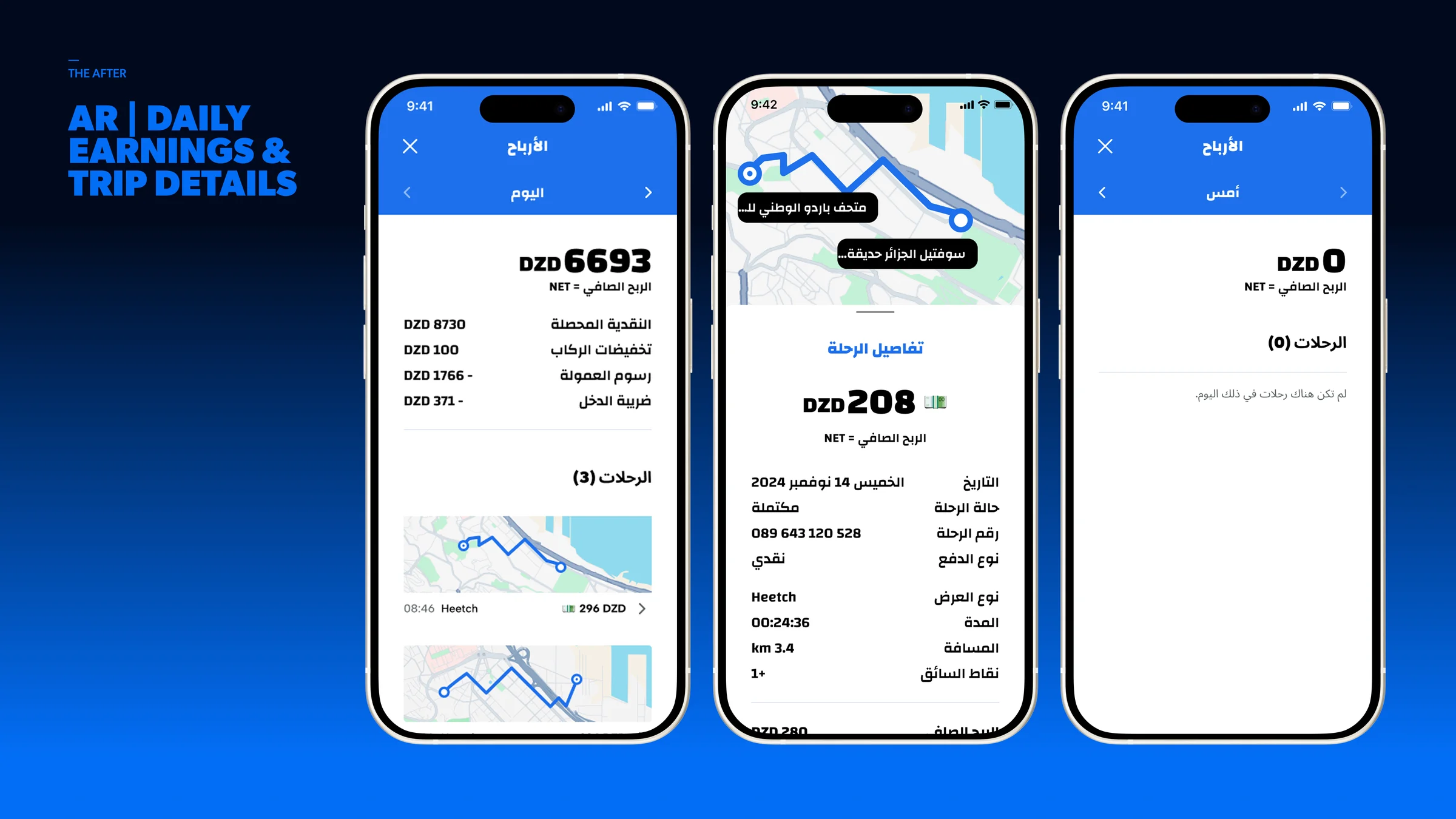
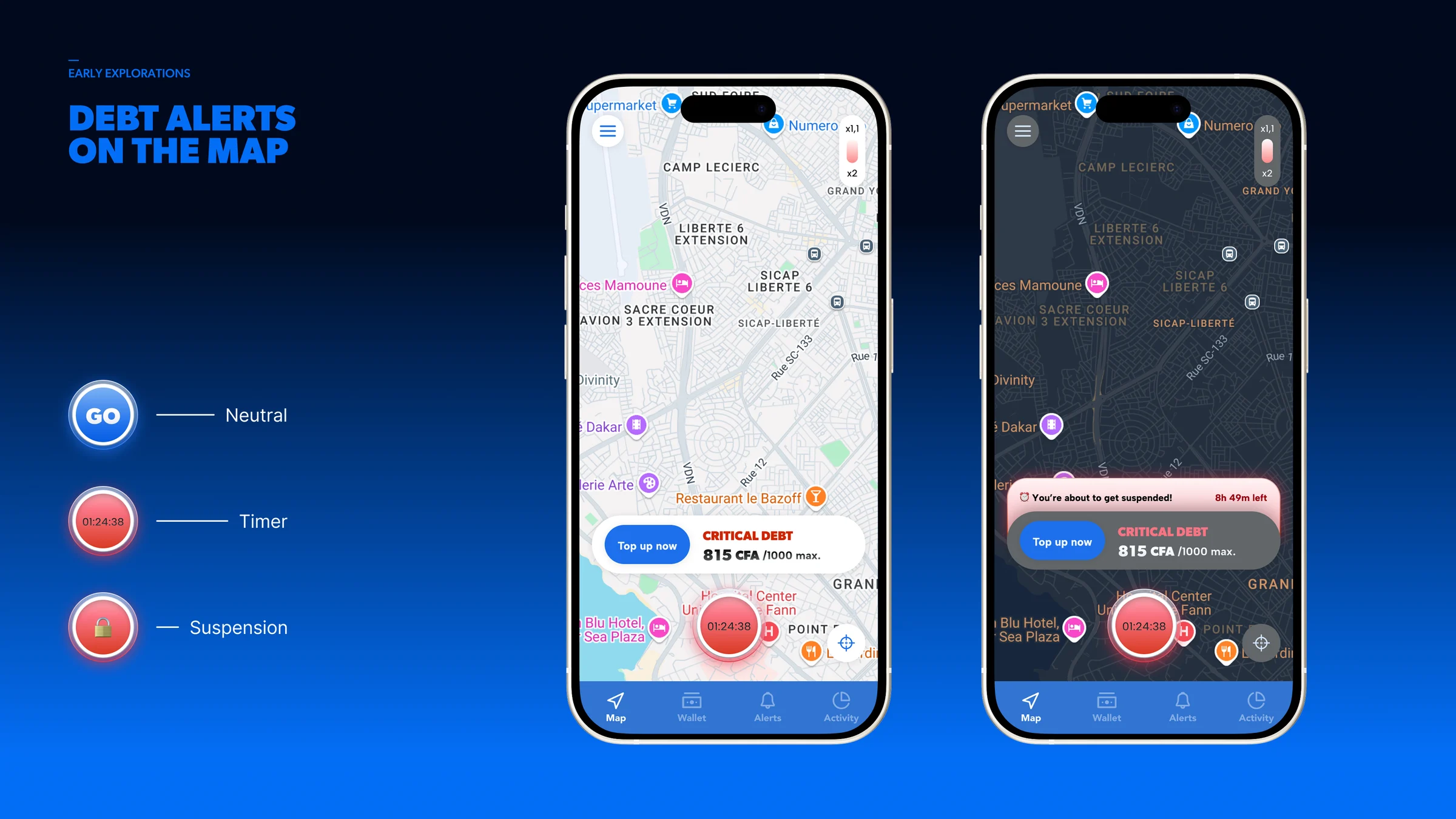
Drivers live in a car, on a map. They process colour and shape fast, text slowly. So money speaks their visual language: a dashboard gauge for the balance, and receipts and map routes for trips.
Decision: two states, not three
Usability tests ran in five markets at once: one localised Maze per country, with real drivers at the Heetch Cafés. Drivers read the yellow “low” state as safe and only reacted at red, hours before suspension.
Decision: two states only, blue = safe, red = danger, with one persistent CTA: “+ Recharge your balance”.
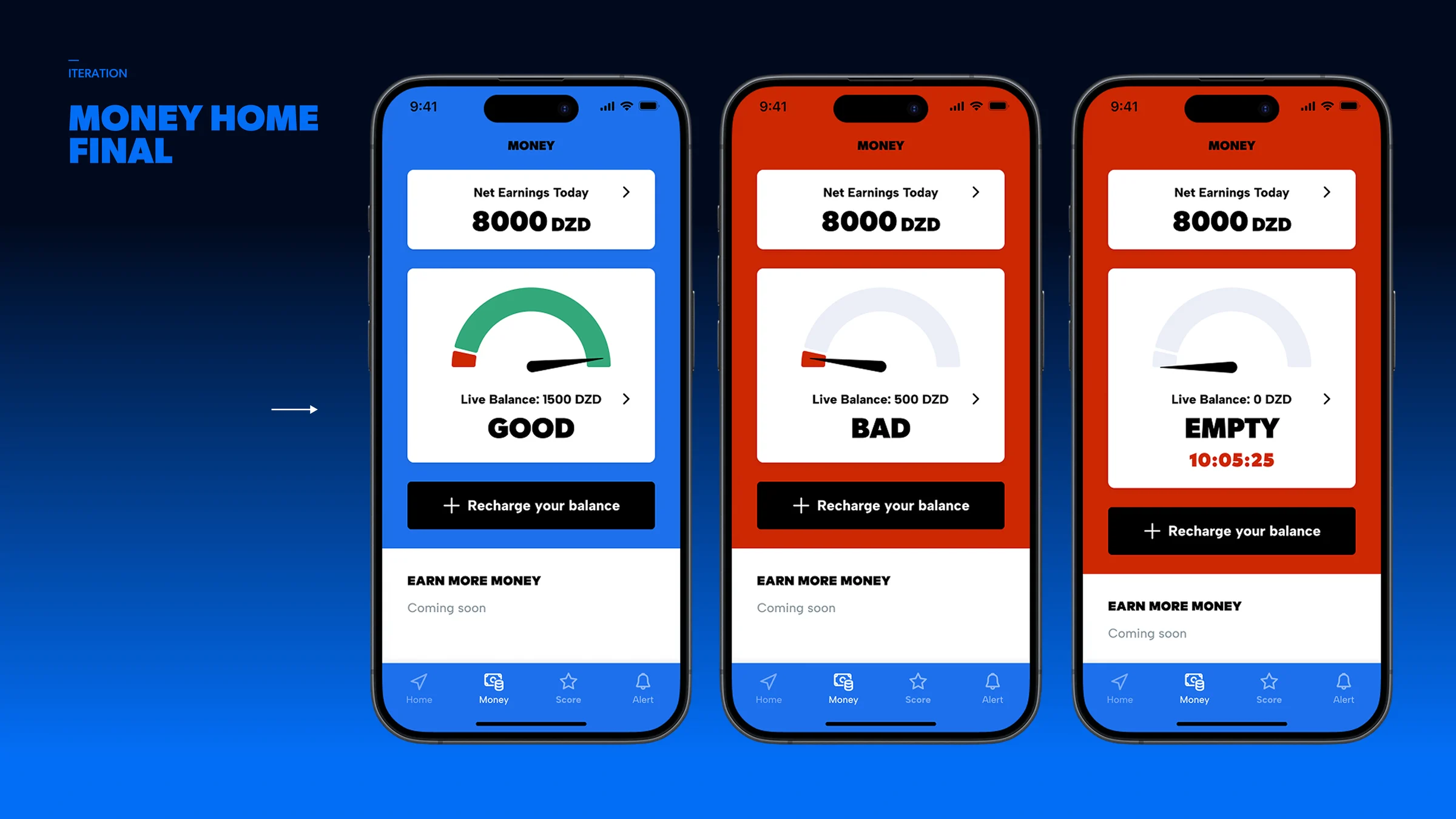
Error prevention: at zero balance, a countdown gives drivers time to top up before suspension, configurable per country after pushback from one market.
UX writing: about 90% less text on the main screens, every translation reviewed with local teams, and Heetch’s first Arabic prototype.
Impact
Rolled out market by market, with real-time balance updates.
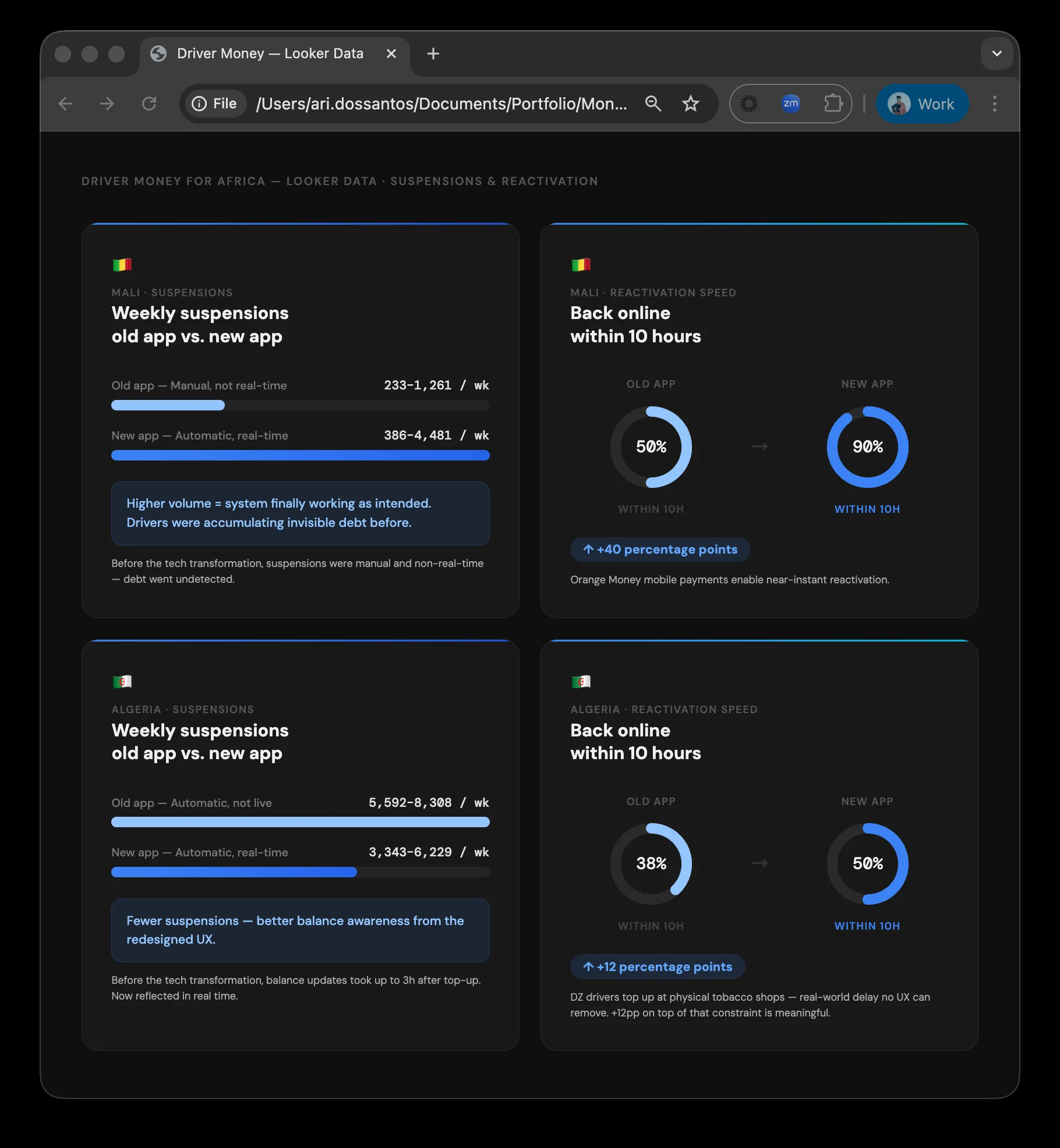
- Mali: the money experience was drivers’ #1 highlight. 90% of suspended drivers back online within 10 hours, up from 50%.
- Algeria, the largest African market: weekly suspensions down from 6–8k to 3–6k, and reactivation within 10 hours up from 38% to 50%.
- Senegal: “much clearer”.
Post-launch iteration: half of Senegal’s drivers couldn’t find their balance details, so the debt alert moved onto the map, where drivers look.
Learnings
- Prototype speed is test speed: the gauge was tested once, not three times. Today I’d use Figma Make.
- Design for the most constrained user: the visual-first approach also worked for drivers in France. Accessibility benefits everyone.
Thank you for reading this far!
Also check out:
Fleetch
Fleetch helps ride-hailing drivers in West Africa finance and own their cars. As their Lead Product Designer, I designed and built their first driver app in 3 days.
Heetch
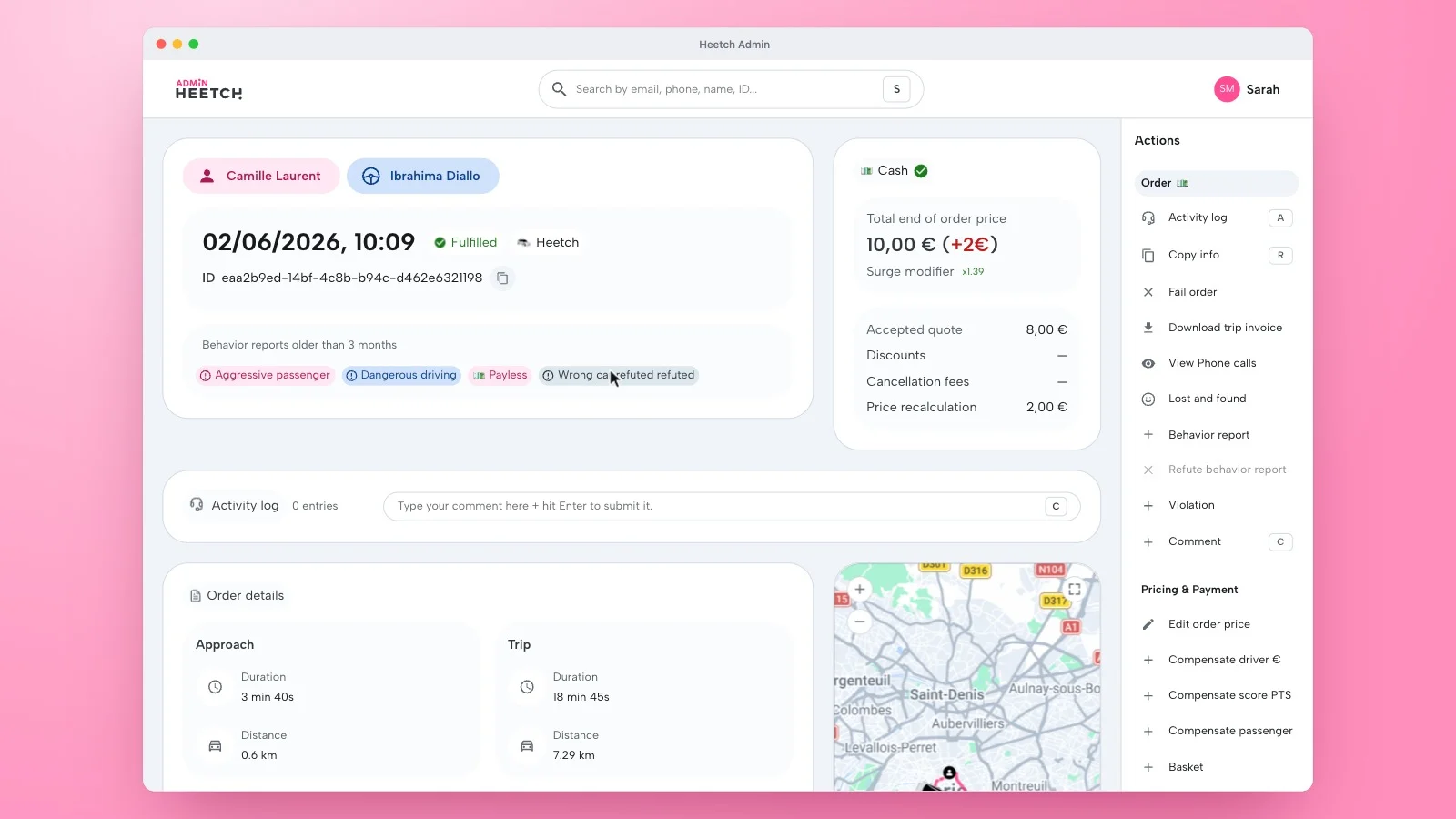
Heetch helps 3 million passengers get around, at a price they negotiate. I redesigned the entire Admin behind it: agent satisfaction went from 5 to 8.4/10.
Omio
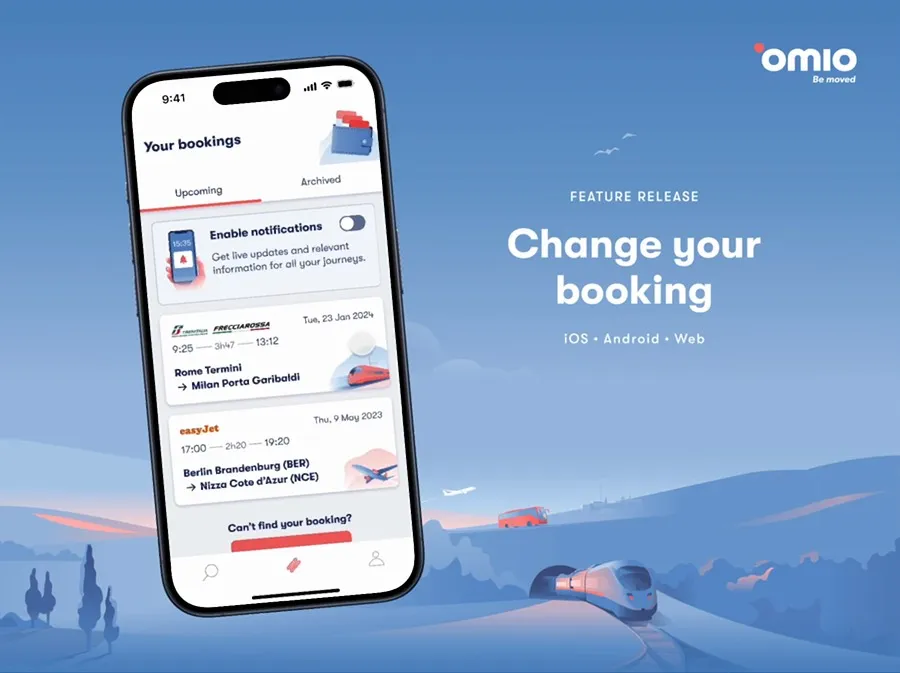
Omio helps travellers compare and book trains, buses and flights in one place. I designed its first self-service booking changes: 4 in 5 changes self-served within a month.
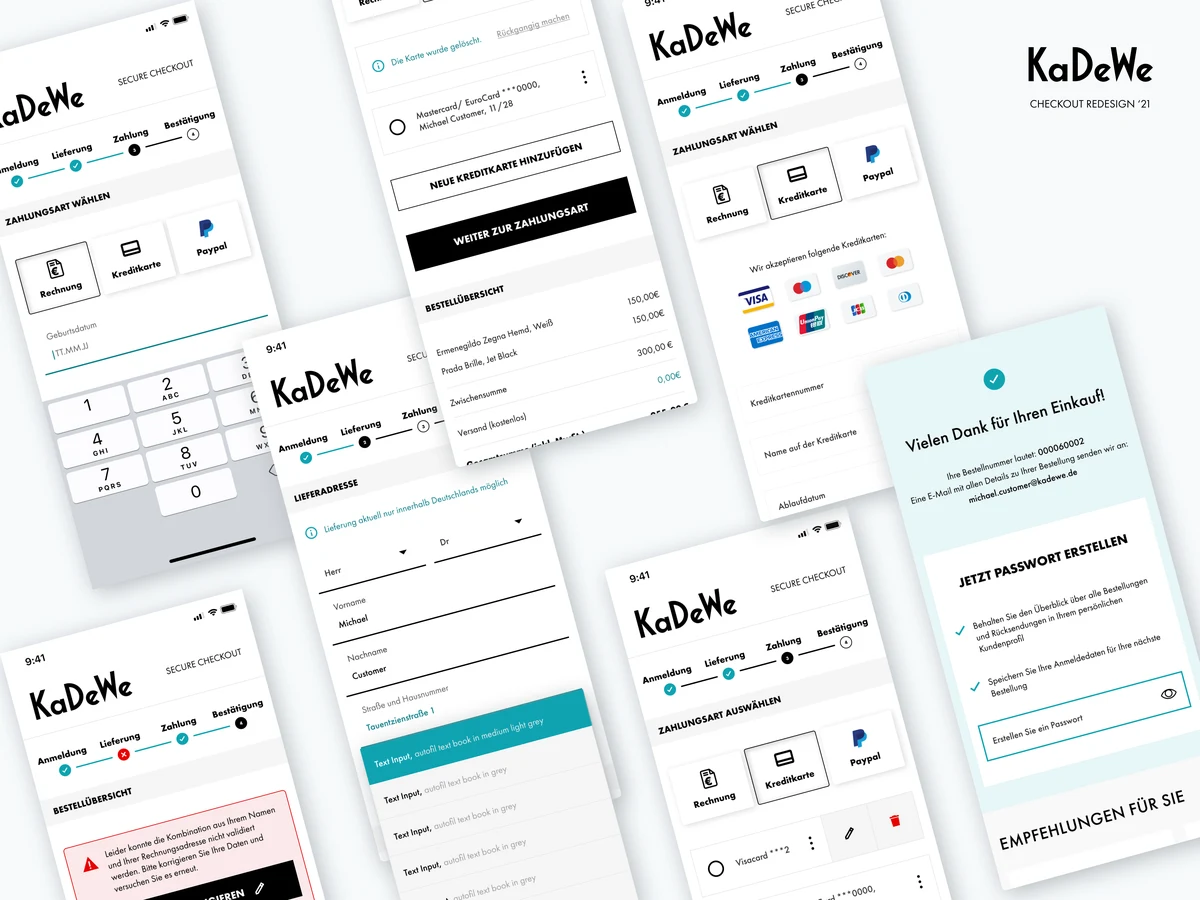
KaDeWe
KaDeWe Group runs Germany’s three most iconic luxury department stores, and their shared web shop. I redesigned their checkout: +14% conversion.